
After waiting on (cold) pins and needles to find out what is wrong with your furnace, the technician comes back to inform you that the heat exchanger in your furnace is cracked and your furnace needs to be replaced.
Why would your furnace need to be replaced if the heat exchanger is cracked? Couldn't it simply be repaired? What happens if a crack heat exchanger goes without attention? What exactly does this heat exchanger do, how does it work when it is not damaged?
These are all common questions that are asked when a homeowner is given the news that a simple service call has turned into an expensive replacement.
In this blog, we will answer all of these common questions previous mentioned.
Let's start with the basics, shall we?
1. What does a heat exchanger do? How does it work?

When your furnace turns on, burners send hot combustible gases to your heat exchanger. From there, heat from the combustion gases gets transferred to the metal walls within the heat exchanger, which causes those metal walls to heat up.
Now that the walls are heated up, cold air from your house goes over those hot metal walls on the outside of the heat exchanger. This allows air from your home to heat up without picking up those dangerous combustible gases within the heat exchanger. Warm air is then distributed through out your home using your duct work.
However, those dangerous combustible gases need a place to go, or vent to.
With standard furnaces, those gases are blown out of the heat exchanger and vented outside of your home. If you have a high efficiency furnace, those gases are cycled through a second heat exchanger, where even more heat is pulled from those gases and used to further heat your home.
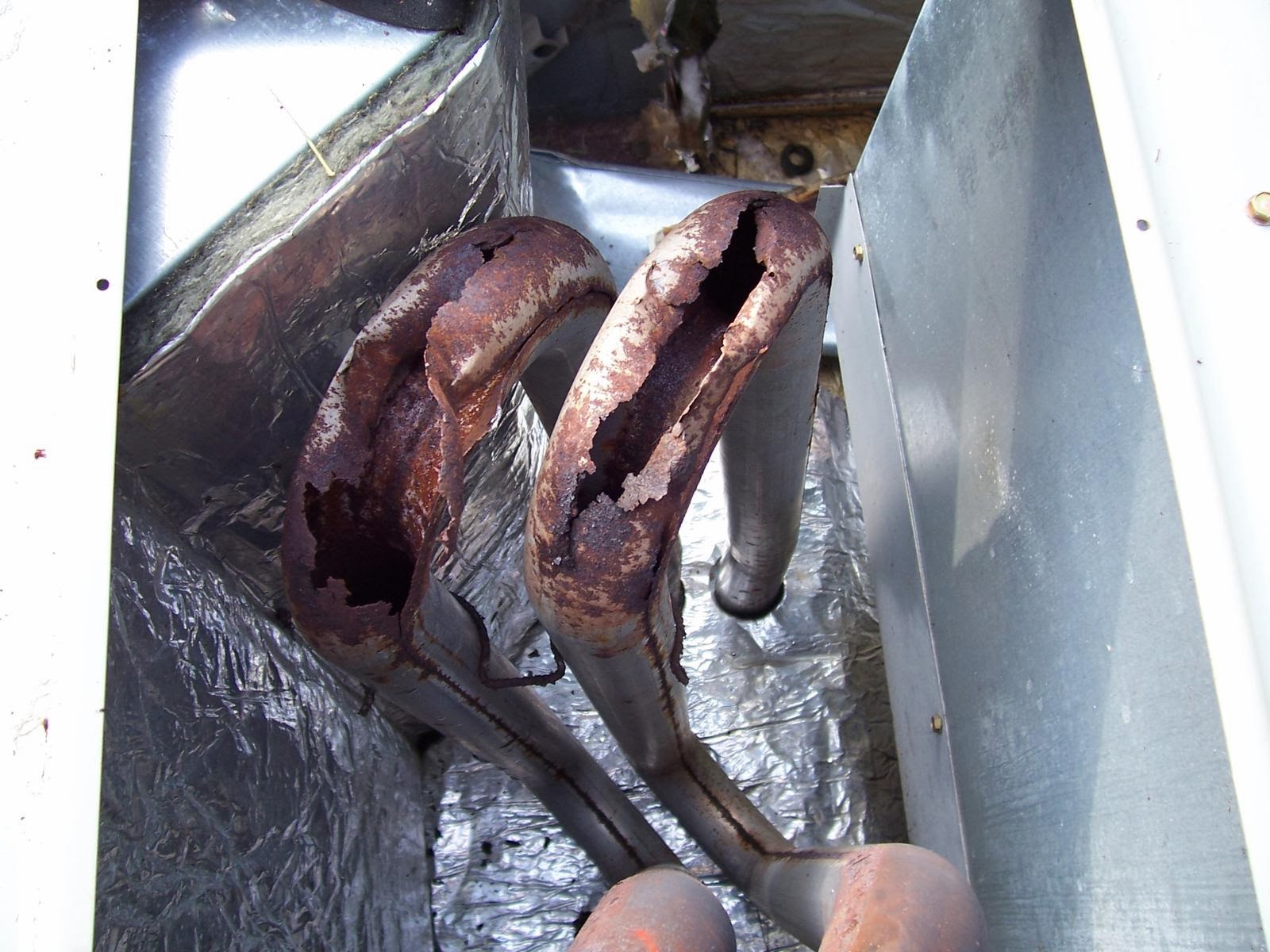 |
| Severely cracked heat exchanger |
2. What does it mean when your heat exchanger is cracked? Can it simply be repaired?
Cracks in a heat exchanger can’t be fixed long-term, and repeated short-term repairs can cost more than a new heating unit. The metal of the heat exchanger is generally too thin to weld shut and nearly impossible to access without removing it completely. Often even more cracks are found along the way to attempting the repair of the original.
3. What happens if a cracked heat exchanger goes without attention?
These gases contain the products of combustion. If they get into your air supply circulating through your house, gases like carbon monoxide (CO) can have dangerous health consequences. Heat exchanger cracks cause interior pressure changes, affecting how well the furnace burns.
.jpg) |
| Small crack in heat exchanger |
Poor combustion, when the furnace flame burns incompletely‚ produces higher carbon monoxide levels. Soot can block the venting of these lethal gases, sending it into the house, thus your family breathes them in. We've all heard the unfortunate news stories about family tragedy brought on by carbon monoxide exposure, especially in the winter heating season. The worst cases of odorless, colorless carbon monoxide accumulation cause death. The main reasons carbon monoxide poisoning can happen are:
- Inadequate or blocked gas vents
- Heat exchanger problems
- Incomplete combustion, resulting in high CO production
- Lack of fresh, clean air and proper ventilation in the home
- CO detectors missing or non-functional
Please be sure you have working CO monitors/detectors, right outside each sleeping area. Don’t forget smoke alarms and radon detectors.
There you have it! Those are the basics of a heat exchanger and why they are so important to your heating system. If you have been given a diagnosis of a cracked heat exchanger and would like a second opinion, feel free to give us a call. We offer $49 furnace inspections so you may have piece of mind to make an educated decision for you and your family's safety and comfort, give us a call and we will be more than happy to come take a look! (616) 205-5522.
Have a heating or cooling topic you would like to know more or have questions about? Feel free to email us at DSBComfortZone@gmail.com and we will answer you or cover your interests!
As always, thank you for reading!
DSB Comfort Zone
Heating, Cooling and Ventilation
201 E. Division St.
Suite A
Sparta, MI 49345
P: (616) 205-5522
F: (616) 205-5533

